Multi-homed BGP peering and ISP routing
Multi-homed BGP operation with IPT upstreams, external CDNs, local CDNs, peerings to external customers, routing policies, prefix filters, and session monitoring.
Key metrics
- 2 IP transit (IPT) upstreams
- 2 external CDNs + 3 local CDNs
- 2 peerings delivering CDN traffic to external customers
- RPKI/IRR filters in place
- BGP session monitoring with alerts
- IPT upstreams
- BGP policies
- Local/external CDNs
- External customers
Logical view without ASNs, prefixes, IPs, or third-party names.
Context
The ISP already ran with transit redundancy, but the network kept growing until it reached two IPT upstreams, two external CDNs, three local CDNs, and two peerings delivering traffic to external customers so they could reach those local CDNs. That growth demanded consistent BGP policies for availability, route control, content prioritization, and session monitoring.
Actions
- Operated and evolved a multi-homed BGP design with IPT upstreams, external CDNs, local CDNs, and peerings to third parties.
- Implemented routing policies: Local Preference to prioritize transit and content, AS Path prepend for balancing, and BGP communities for traffic control.
- Filtered inbound and outbound prefixes based on IRR databases and RPKI validation.
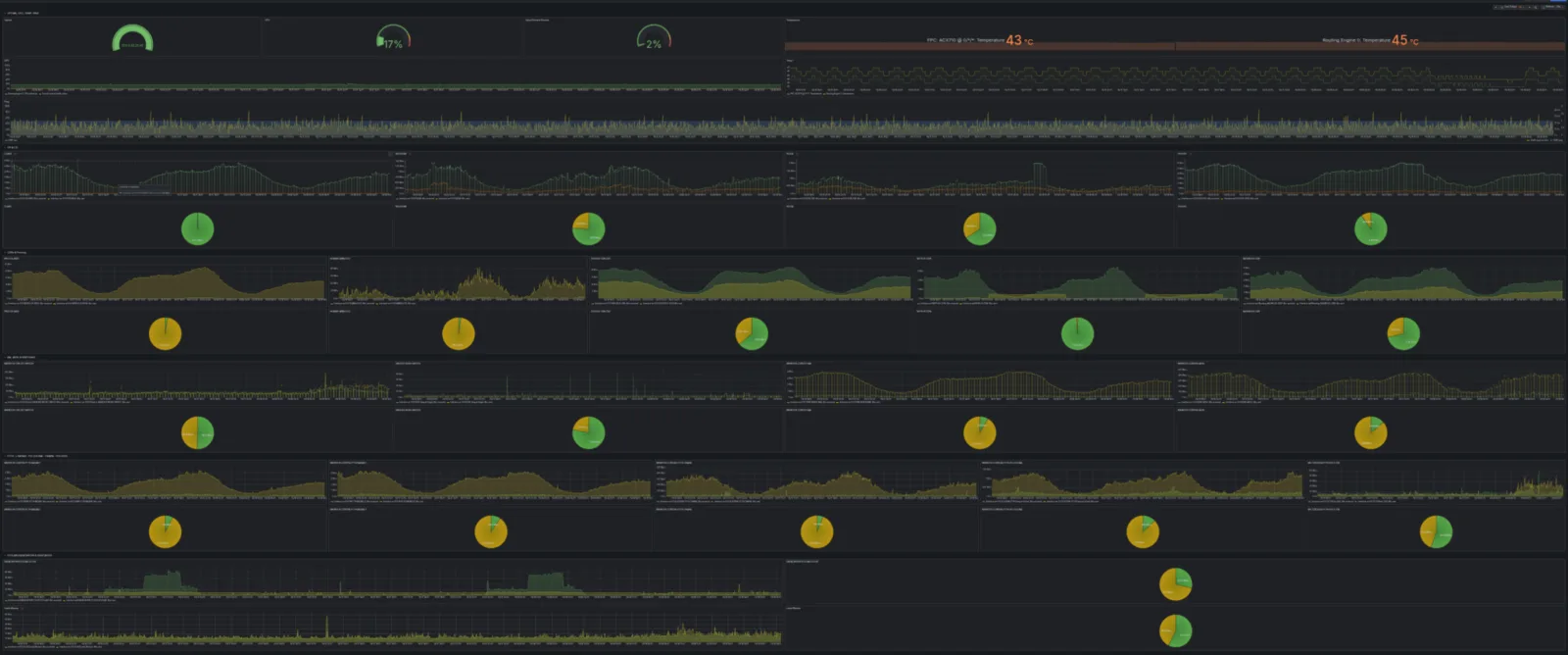
- Monitored BGP sessions with alerts for critical upstreams, CDNs, and peerings.
Results
- Consolidated BGP topology with 2 IPT upstreams, 2 external CDNs, 3 local CDNs, and 2 peerings to external customers.
- Better transit and CDN utilization through preference, balancing, and traffic-control policies.
- Active RPKI validation: mitigated prefix hijacking and route leak risks.
- Local CDN traffic delivered to external customers through controlled peerings.